
 Pin
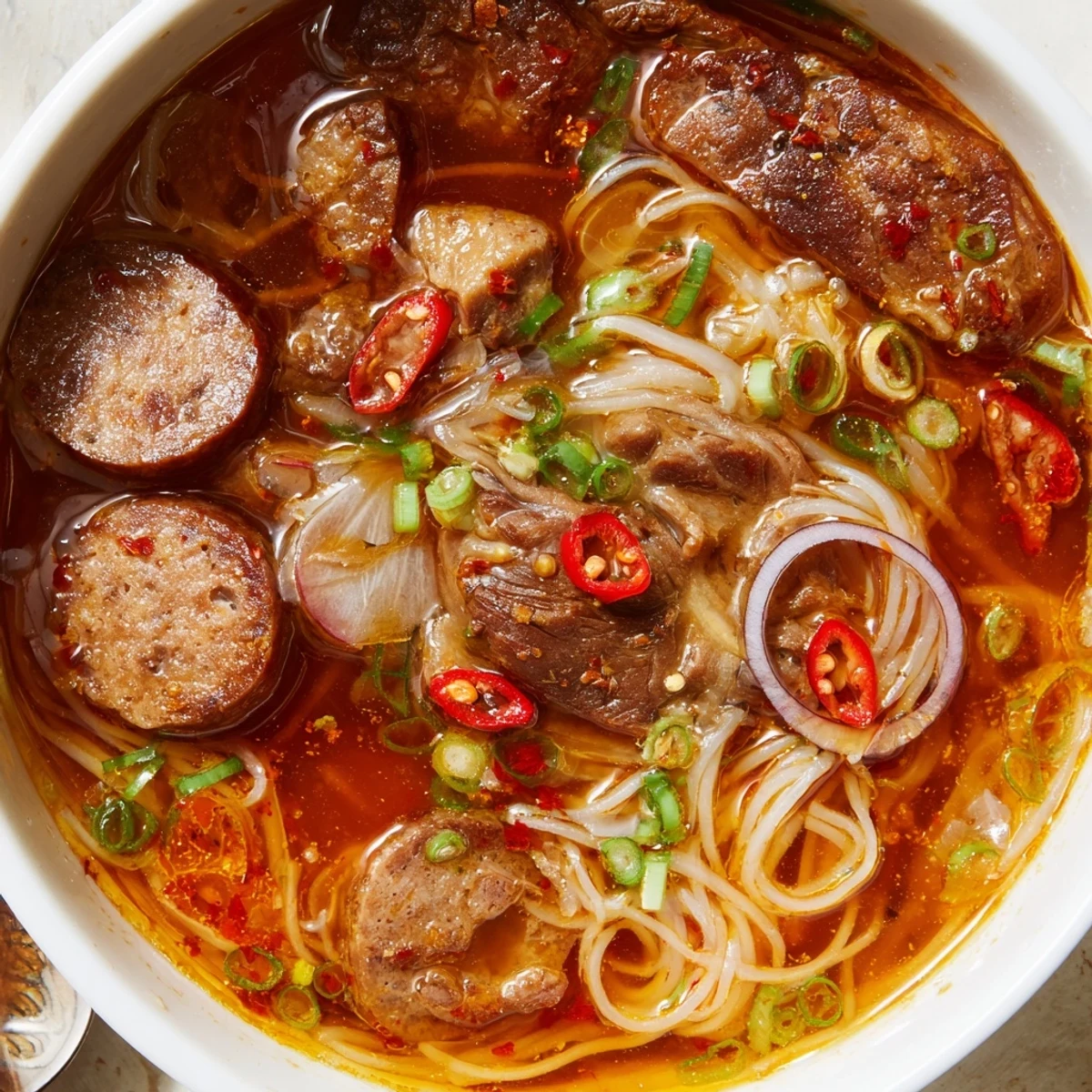
Pin Bun Bo Hue is a vibrant Vietnamese noodle soup from the imperial city of Hue, known for its distinctive spicy and aromatic broth infused with lemongrass. Unlike its cousin Pho, this dish features thick round rice noodles and a complex flavor profile achieved through shrimp paste and annatto-infused chili oil.
The preparation begins with blanching beef shank and pork hock, then simmering them for two hours with bruised lemongrass, onion, garlic, and ginger to create a deeply flavorful base. The signature red hue and extra heat come from sizzling shallots, garlic, and chili flakes in annatto-tinted oil.
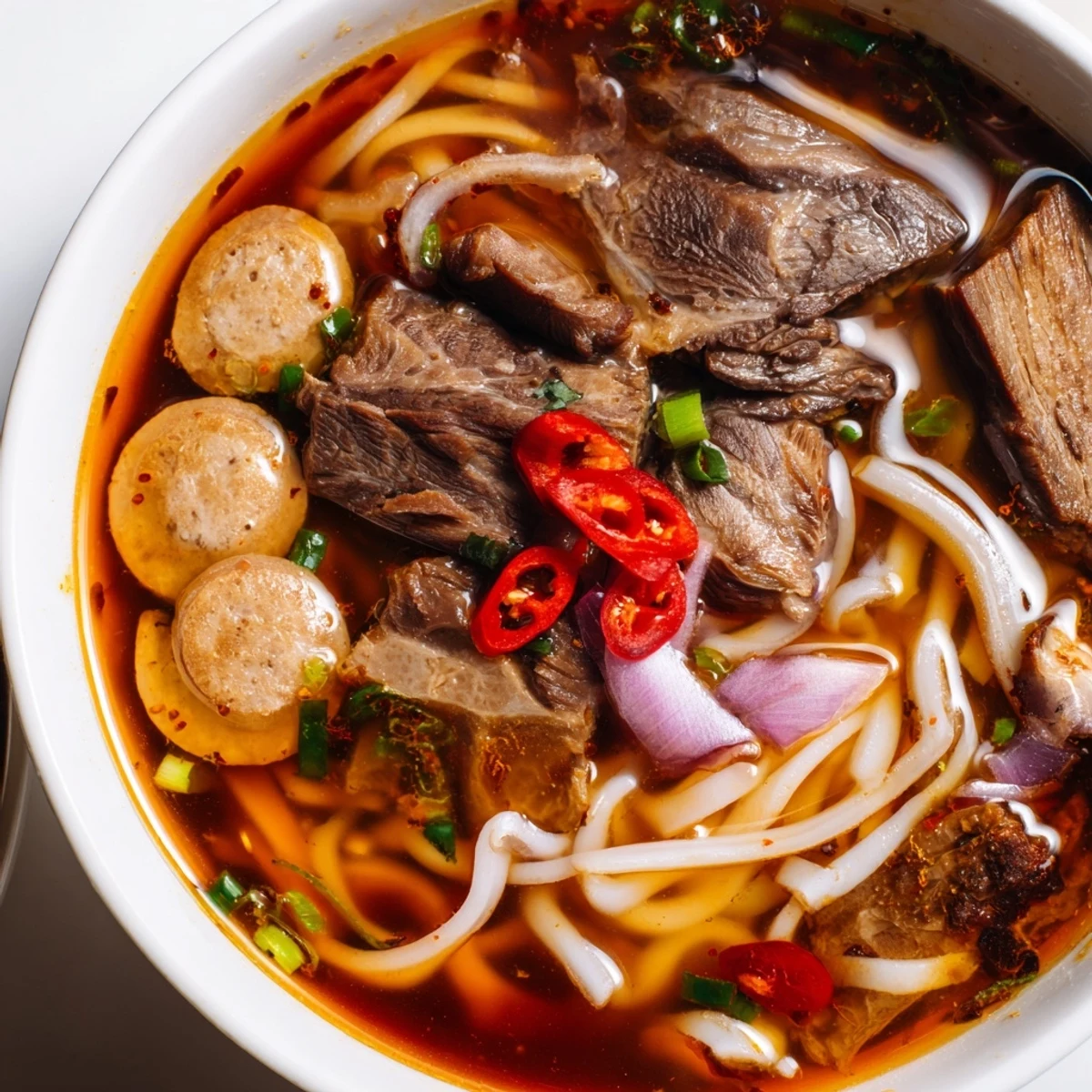
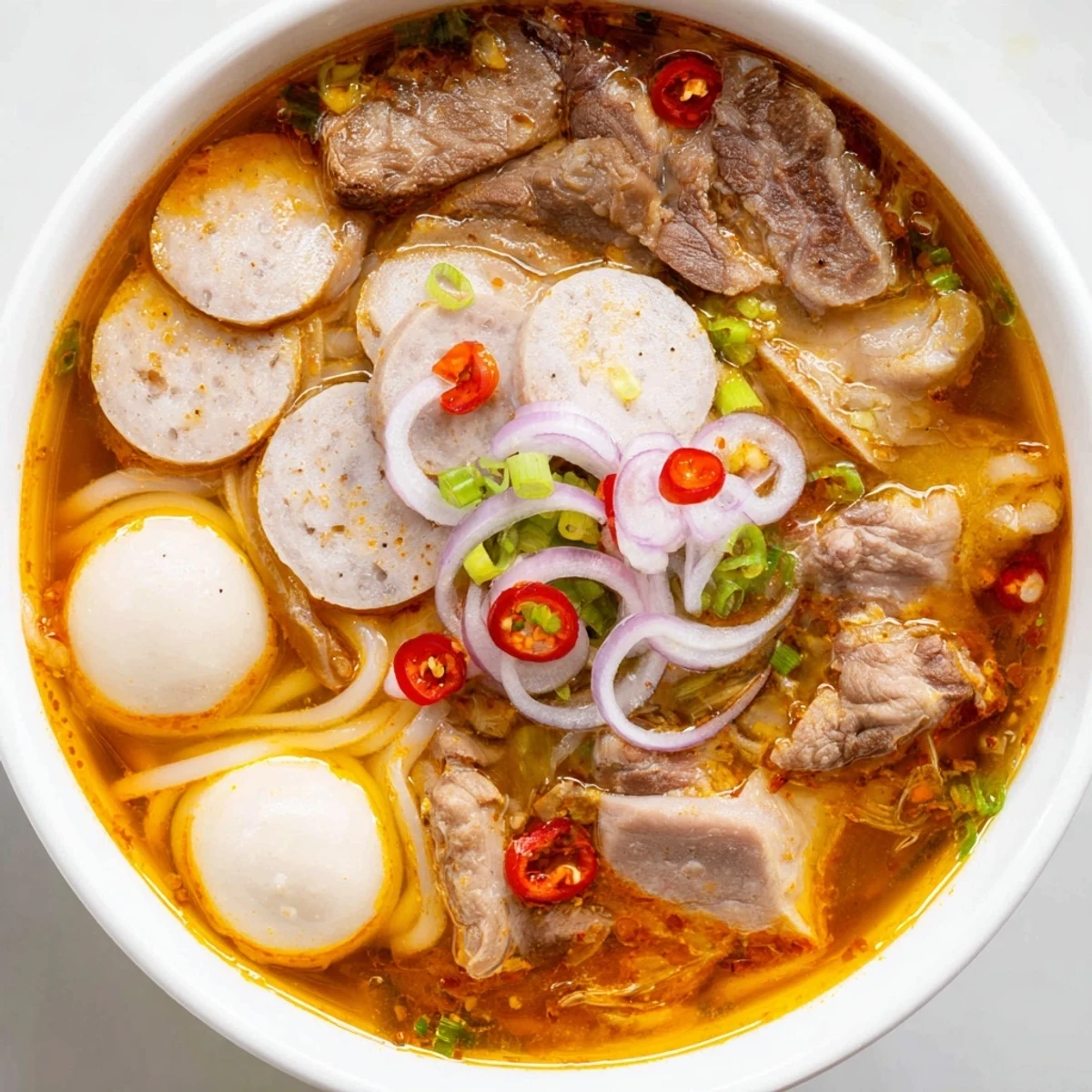
Each bowl is assembled with tender slices of beef, pork hock, Vietnamese sausage, and optional blood cubes, then flooded with the aromatic broth. Fresh herbs, bean sprouts, lime wedges, and sliced chilies are added at the table, allowing diners to customize their bowl to their preferred spice level.
The steam rising from my first bowl of Bun Bo Hue in a tiny Hue alleyway still haunts me in the best way possible. It was pouring rain, the kind of tropical downpour that soaks through everything, and this fiery red broth somehow warmed me from the inside out. I watched the vendor add that final drizzle of chili oil with the precision of someone who has made thousands of bowls, her hands moving while she laughed with customers. That afternoon taught me that some dishes are not just food, they are an entire sensory experience you carry with you forever.
My friend Linh showed up at my door last winter with a bag of beef shank and the determination to teach me her grandmother version. We spent three hours huddled over the stock pot, her correcting my fish sauce measurements and telling me stories about Saturday mornings in her family kitchen. When we finally sat down to eat, snow falling outside our window, she took one sip and nodded, saying that was exactly right. Now every time I make this, I can practically hear her laughing at me for buying the wrong noodles again.
Ingredients
- Beef shank and pork hock: These bone-in cuts create that rich, gelatinous broth foundation that makes you want to sip every last drop
- Lemongrass stalks: Bruise them with the back of your knife to release those citrusy oils that define this soup
- Shrimp paste: The secret umami bomb that makes people ask what did you put in this, though my friend suggests frying it first to mellow the intensity
- Annatto seeds: They are not here for flavor, they lend that signature sunset orange red color that makes the bowl so beautiful
- Thick rice noodles: Do not try to substitute thin vermicelli, these substantial noodles are what make Bun Bo Hue distinct from pho
- Cha lua sausage: These bouncy, slightly sweet Vietnamese pork sausages add texture and a familiar comfort element
Instructions
- Build your broth foundation:
- Bring beef shank and pork hock to a rolling boil, drain immediately, and rinse under cold water to remove all the gray impurities. This step is non negotiable for that crystal clear result. Refill with fresh water, add your aromatics, and simmer gently while skimming any foam that rises to the surface.
- Infuse the spices:
- Add fish sauce, salt, both sugars, and shrimp paste, letting the broth develop that complex balance of sweet, salty, and umami. The kitchen should smell incredible by now, lemongrass and beef filling every corner. Simmer for two full hours until the meat offers zero resistance when pierced with a fork.
- Craft the chili oil:
- Warm your oil with annatto seeds until they release their sunset color, then discard them. Sauté shallots and garlic until they soften, then stir in chili flakes for just a minute. This crimson oil will sit on top of each bowl like a beautiful, spicy ribbon.
- Prep your proteins:
- Cook those thick noodles until they have just the right bounce, drain well, and divide among bowls. Slice your brisket paper thin, arrange the cha lua rounds, and if you are brave enough for blood cubes, warm them gently in some of the broth.
- Bring it all together:
- Arrange your meats and noodles artistically in each bowl, then ladle that steaming, fragrant broth over everything. Finish with that homemade chili oil, watching it swirl and bloom across the surface. The steam hitting your face should feel like a hug from someone who loves you.
 Pin
Pin There is this moment every time I serve Bun Bo Hue where the table goes completely silent for about thirty seconds. Just the sound of spoons clinking against bowls and people making involuntary happy noises while steam fogs up their glasses. That communal quiet, when everyone is just experiencing something together, that is the real reason I spent three hours making broth.
Making It Your Own
My version has evolved from Linh strict recipe into something that fits my own tastes and time constraints. Some days I skip the blood cubes entirely because my family just will not touch them, and that is okay. Other days I double the chili oil because we are feeling particularly brave. The broth remains the same foundation, but the decorations around it change with who is sitting at my table.
The Art of Assembly
I used to dump everything into the bowl haphazardly until a chef in Hanoi showed me how placement actually matters. He arranged each component with such care, explaining that the first bite should have a little bit of everything. Now I take those extra seconds, placing the herbs just so, making sure each bowl looks like someone actually cared about the person who will eat it.
Leftover Magic
If you somehow have broth left over, consider yourself blessed for the next day. It freezes beautifully, or you can keep it in the refrigerator for a few days of the best quick lunches imaginable. The flavors actually deepen overnight, developing this mellow richness that makes the second round maybe even better than the first.
- Freeze broth in quart containers for instant comfort on busy weeknights
- Cook noodles fresh each time, never store them in the broth or they will turn to mush
- Keep your garnishes prepped and separate so everything stays crisp and bright
 Pin
Pin Share this with people who appreciate food that tells a story and takes some time, because they are the ones who will understand why it matters. Good soup is never just good soup.
Recipe Questions & Answers
- → What makes Bun Bo Hue different from Pho?
-
Bun Bo Hue originates from central Vietnam and features a spicy, lemongrass-forward broth with thick round rice noodles, while Pho comes from northern Vietnam with a milder anise-and-cinnamon seasoned broth served with flat rice noodles.
- → Is shrimp paste essential for this dish?
-
Shrimp paste (mam ruoc) provides the authentic depth and umami characteristic of Hue cuisine. While it can be omitted, the broth will lack the traditional complexity that defines this regional specialty.
- → Can I make the broth ahead of time?
-
Yes, the broth actually improves when made a day ahead. Cool, refrigerate overnight, then skim off any solidified fat before reheating. The flavors will have developed more depth during resting.
- → Where do I find thick round rice noodles?
-
Look for bun bo Hue noodles at Asian markets labeled as 'bun bo' or 'thick round rice noodles.' Regular vermicelli can work in a pinch but won't provide the authentic chewy texture.
- → How spicy is this dish traditionally?
-
Bun Bo Hue is meant to be spicy, but the heat level is adjustable. The aromatic chili oil provides a base warmth, while fresh bird's eye chilies at the table let each diner control their preferred spice intensity.
- → What can I substitute for pork blood cubes?
-
Pork blood cubes are traditional but optional. Many home cooks omit them, and the dish remains delicious without. Tofu cubes or simply extra portions of beef and pork are common alternatives.