
 Pin
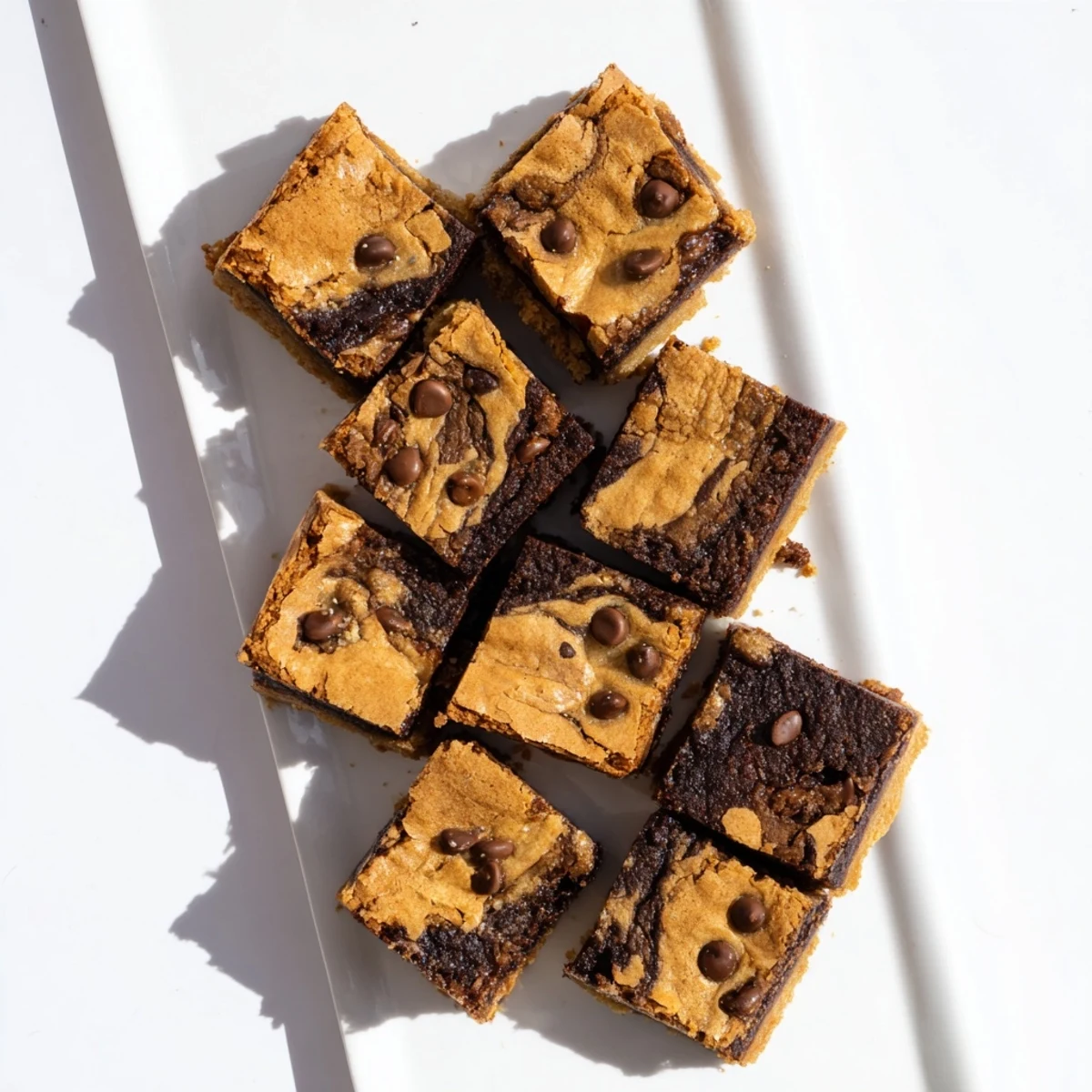
Pin Brookies combine the best of both worlds—rich, fudgy brownie layers topped with classic chewy chocolate chip cookie dough. This hybrid treat delivers contrasting textures in every bite, with a dense chocolate base and crispy, chunky cookie topping. The two batters are layered in a single pan and baked together until the edges are golden and the center remains deliciously gooey.
The preparation comes together in under 30 minutes with simple pantry ingredients. For the brownie layer, melted butter and sugar are whisked with eggs and vanilla, then combined with cocoa powder and flour. The cookie layer uses creamed butter and sugars for that signature chewy texture, studded with semi-sweet chocolate chips.
Bake time is crucial—about 30-35 minutes at 175°C (350°F) yields perfectly set edges while keeping the center fudgy. Let cool completely before slicing into 16 bars. Store in an airtight container for up to 4 days, though they rarely last that long.
My kitchen counter was a disaster zone the Saturday my niece challenged me to settle the brownie versus cookie debate once and for all. Flour dusted every surface, cocoa powder stained my favorite apron, and somewhere between the third batch and a melted butter mishap, brookies were born in my house. That afternoon taught me you never really have to choose between two things you love.
I brought a tray of these to a friends barbecue last summer and watched a grown man eat four squares before the burgers even hit the grill. His wife later texted me the next morning asking for the recipe before breakfast was over. That kind of reaction is really all the validation you need.
Ingredients
For the brownie layer you will need the following.
- Unsalted butter (115 g, melted): Melting the butter rather than creaming it is what gives the brownie layer that dense, fudgy crumb rather than a cakey one.
- Granulated sugar (200 g): A generous amount of sugar keeps the brownie base glossy and slightly crackly on top.
- Large eggs (2): Beating them well into the melted butter and sugar creates that beautiful shiny surface.
- Vanilla extract (1 tsp): Use pure extract if you can, the flavor difference in a simple brownie batter is noticeable.
- Unsweetened cocoa powder (65 g): This is the soul of the brownie layer, so use a quality brand you enjoy the taste of on its own.
- All-purpose flour (80 g): Keep it minimal to maintain that fudgy, almost underbaked texture.
- Salt (1/4 tsp): Just enough to sharpen the chocolate and balance the sweetness.
For the cookie dough topping gather these.
- Unsalted butter (115 g, softened): Softened to room temperature so it creams properly with the sugars for a chewy, light texture.
- Brown sugar, packed (90 g): The molasses in brown sugar adds moisture and a caramel depth that white sugar alone cannot achieve.
- Granulated sugar (50 g): A blend of both sugars gives you the chew from brown sugar and crisp edges from the white.
- Large egg (1): Binds the cookie dough together and adds richness.
- Vanilla extract (1 tsp): Echoes the vanilla in the brownie layer and rounds out the flavor.
- All-purpose flour (130 g): Measured carefully, too much flour makes the cookie layer dry instead of chewy.
- Baking soda (1/2 tsp): Gives the cookie top a slight lift so it does not turn into a dense slab.
- Salt (1/4 tsp): Essential for balancing the sweetness in the cookie dough.
- Semi-sweet chocolate chips (150 g): Folded in at the end so every bite studded with pockets of melted chocolate.
Instructions
- Preheat and prepare your pan:
- Heat your oven to 175 degrees Celsius (350 degrees Fahrenheit). Line a 22 by 22 cm square baking pan with parchment paper, leaving enough overhang on the sides to lift the whole thing out later like a sling.
- Mix the brownie batter:
- In a medium bowl, whisk the melted butter and granulated sugar together until well combined. Add the eggs and vanilla, then beat vigorously until the mixture looks glossy and smooth. Fold in the cocoa powder, flour, and salt, stirring until just combined with no dry streaks remaining. Spread this batter evenly across the bottom of your prepared pan.
- Make the cookie dough:
- In a separate bowl, cream the softened butter with both the brown sugar and granulated sugar until light and fluffy, about two minutes of enthusiastic mixing. Beat in the egg and vanilla until fully incorporated. Add the flour, baking soda, and salt, mixing gently until just combined. Fold in the chocolate chips with a spatula, trying not to snack on too many along the way.
- Layer the dough over the batter:
- Drop spoonfuls of the cookie dough over the brownie batter in scattered mounds. Use your fingers or the back of a spoon to gently flatten and spread the cookie dough, covering most of the brownie layer. It is perfectly fine if some brownie peeks through in spots.
- Bake until just right:
- Slide the pan into the oven and bake for 30 to 35 minutes. The edges should turn golden while the center is just barely set with the slightest wobble. Pull them out before they look fully done because carryover heat will finish the job.
- Cool completely before slicing:
- Let the brookies cool entirely in the pan on a wire rack. Use the parchment overhang to lift the whole slab out, then cut into 16 squares with a sharp knife.
 Pin
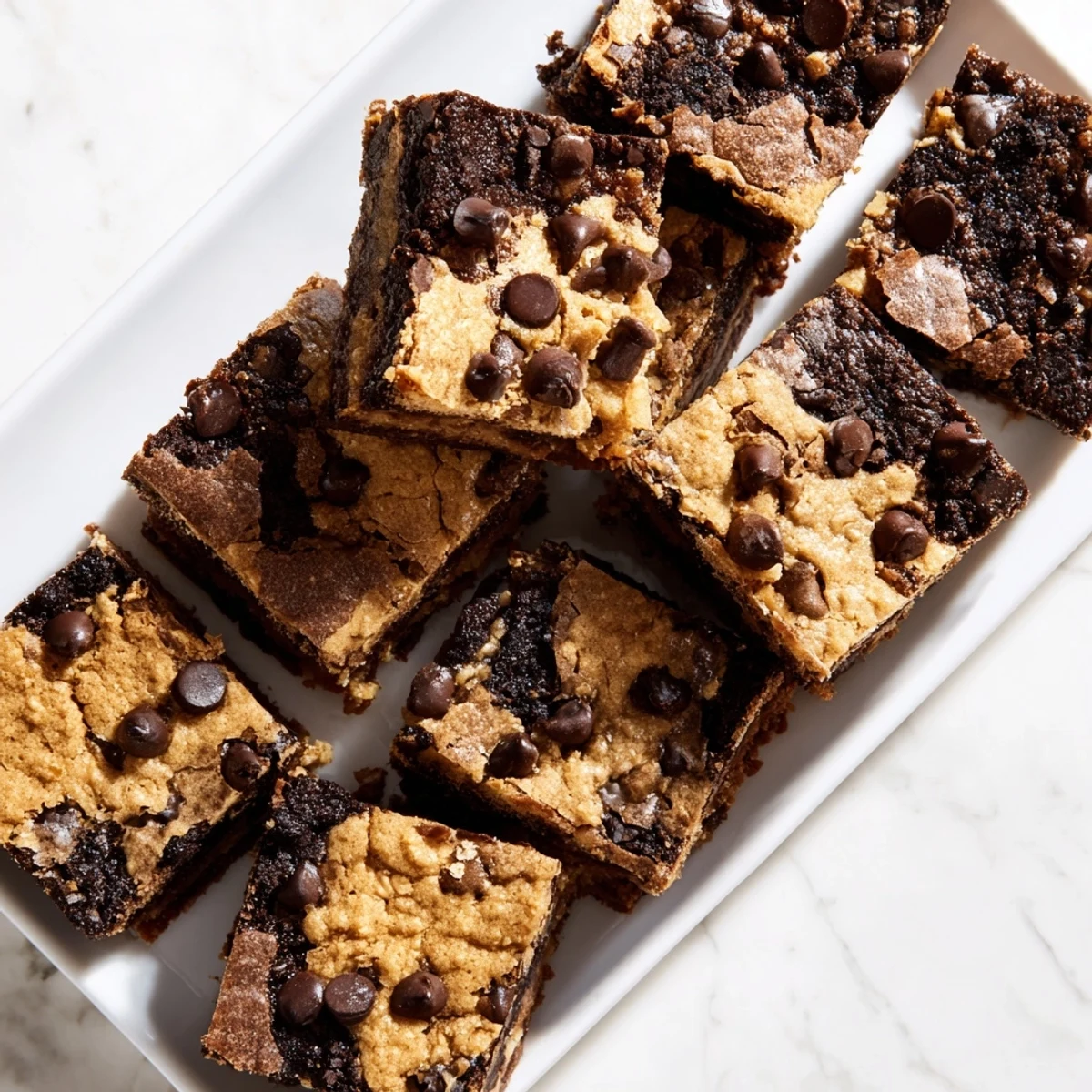
Pin The real magic of brookies hit me when I caught my niece sitting on the kitchen floor at midnight, eating leftover squares straight from the container with her hands. No plate, no napkin, just pure unguarded joy. Food does not get a better compliment than that.
Getting the Texture Just Right
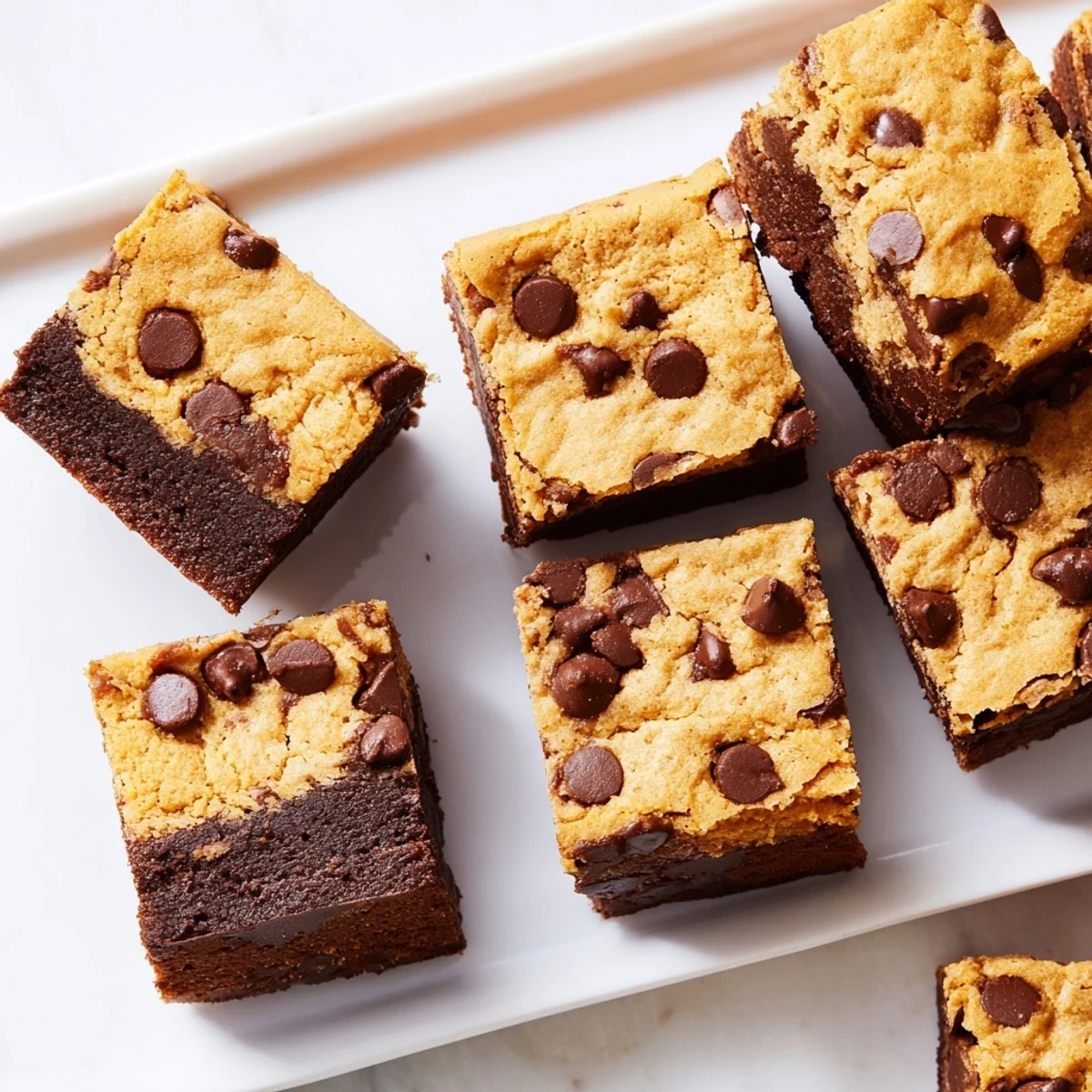
The trick to brookies is treating each layer as its own recipe with its own rules. The brownie batter should be thick and glossy, almost like a truffle filling before it bakes. The cookie dough needs to stay light and pillowy, which means creaming the butter and sugars properly rather than rushing through it. When the two layers bake together, the brownie stays dense while the cookie puffs slightly, and that contrast is everything.
Fun Ways to Switch Things Up
Once you have the basic technique down, brookies are incredibly forgiving for variations. Swap the semi-sweet chips for dark chocolate chunks if you want something more intense, or throw in a handful of toasted pecans for crunch. A sprinkle of flaky sea salt on top the moment they come out of the oven transforms the whole pan into something that tastes far more sophisticated than the effort required.
Storing and Sharing Your Brookies
These bars keep beautifully in an airtight container at room temperature for up to four days, though they rarely last that long in my house. The texture actually improves after resting overnight as the layers settle into each other.
- Freeze individual squares wrapped tightly in plastic wrap for up to three months, perfect for sudden chocolate emergencies.
- Warm a frozen square in the microwave for fifteen seconds and it tastes like it just came out of the oven.
- Always label the container before hiding it in the freezer, or someone else will find it first.
 Pin
Pin Brookies are proof that sometimes the best recipes come from refusing to make a choice. Make a batch, share them freely, and watch people grin.
Recipe Questions & Answers
- → What makes brookies different from regular brownies or cookies?
-
Brookies combine two distinct batters in one pan—a dense fudgy brownie base topped with chewy chocolate chip cookie dough. This creates alternating textures: the bottom layer is rich and moist like a brownie, while the top is crisp and chunky with chocolate chips. You get both flavors in every bite, making it ideal when you can't choose between classics.
- → How do I know when brookies are done baking?
-
The edges should be golden brown and the center should appear just set with a slight jiggle. A toothpick inserted into the center should come out with moist crumbs but not wet batter. The key is not to overbake—brookies remain fudgy in the center even after cooling. Start checking at 30 minutes and remove when the edges are set.
- → Can I make brookies ahead of time?
-
Yes, brookies actually improve after sitting for a day as the flavors meld. Store in an airtight container at room temperature for up to 4 days. You can also freeze them wrapped tightly for up to 3 months. Thaw at room temperature before serving. For best results, let cool completely before storing to prevent condensation.
- → Why does the brownie layer use melted butter while the cookie layer uses softened butter?
-
Melted butter creates a denser, fudgier texture in brownies by coating the flour proteins and preventing gluten development. Softened butter creamed with sugar incorporates air pockets, resulting in the chewy, tender crumb typical of chocolate chip cookies. This technique difference is what gives each layer its distinct character.
- → Can I customize the mix-ins?
-
Absolutely. Swap semi-sweet chips for dark chocolate chunks, white chocolate, or peanut butter chips. Add chopped pecans, walnuts, or toasted almonds to the cookie layer for crunch. For extra indulgence, sprinkle flaky sea salt over the hot brookies right after baking—the salt enhances the chocolate flavor beautifully.
- → What size pan works best for brookies?
-
A 22x22 cm (9x9 inch) square pan is ideal for this proportion of ingredients. The thickness allows both layers to bake evenly without the brownie becoming dry or the cookie remaining underbaked. If using a different pan size, adjust baking time and check for doneness earlier.