
 Pin
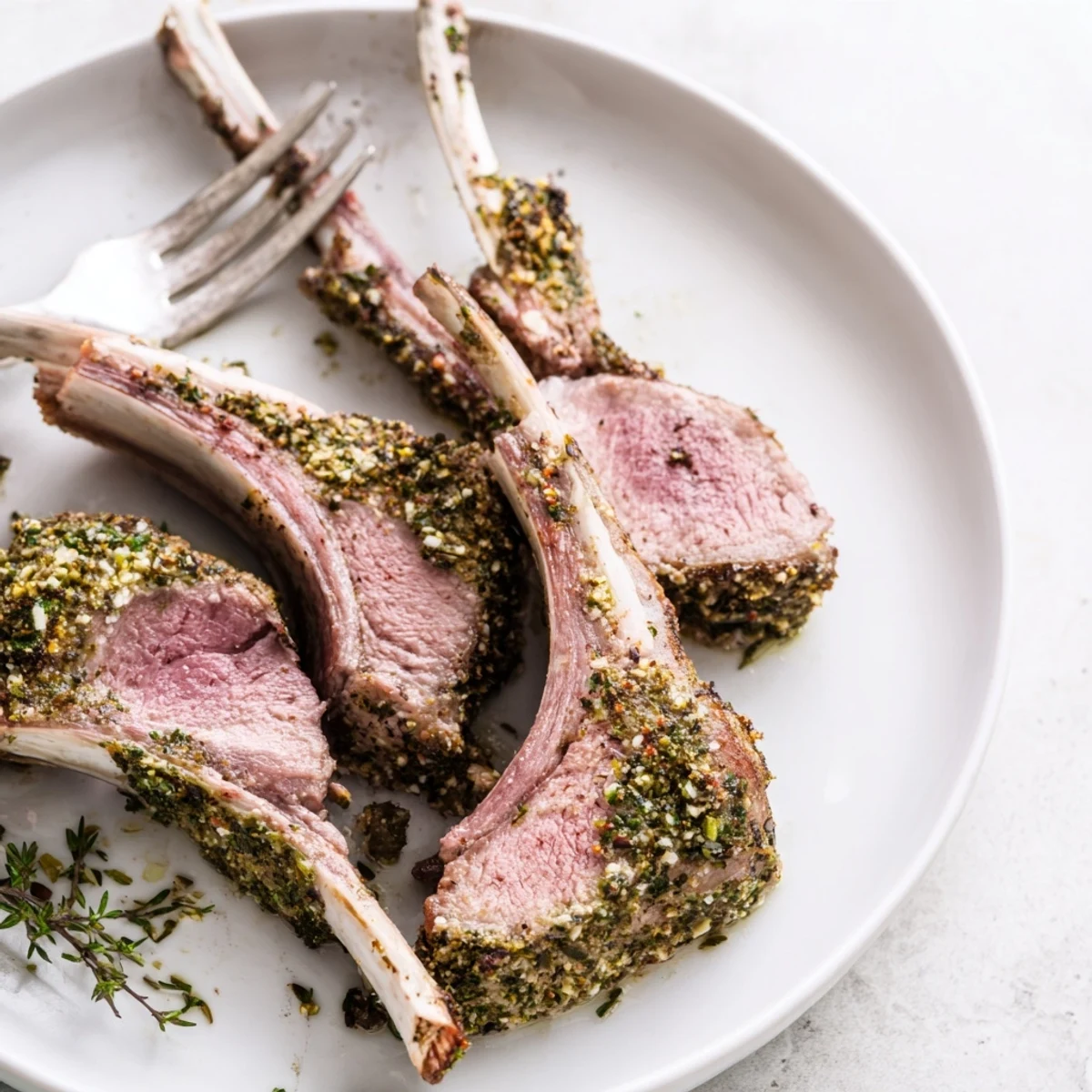
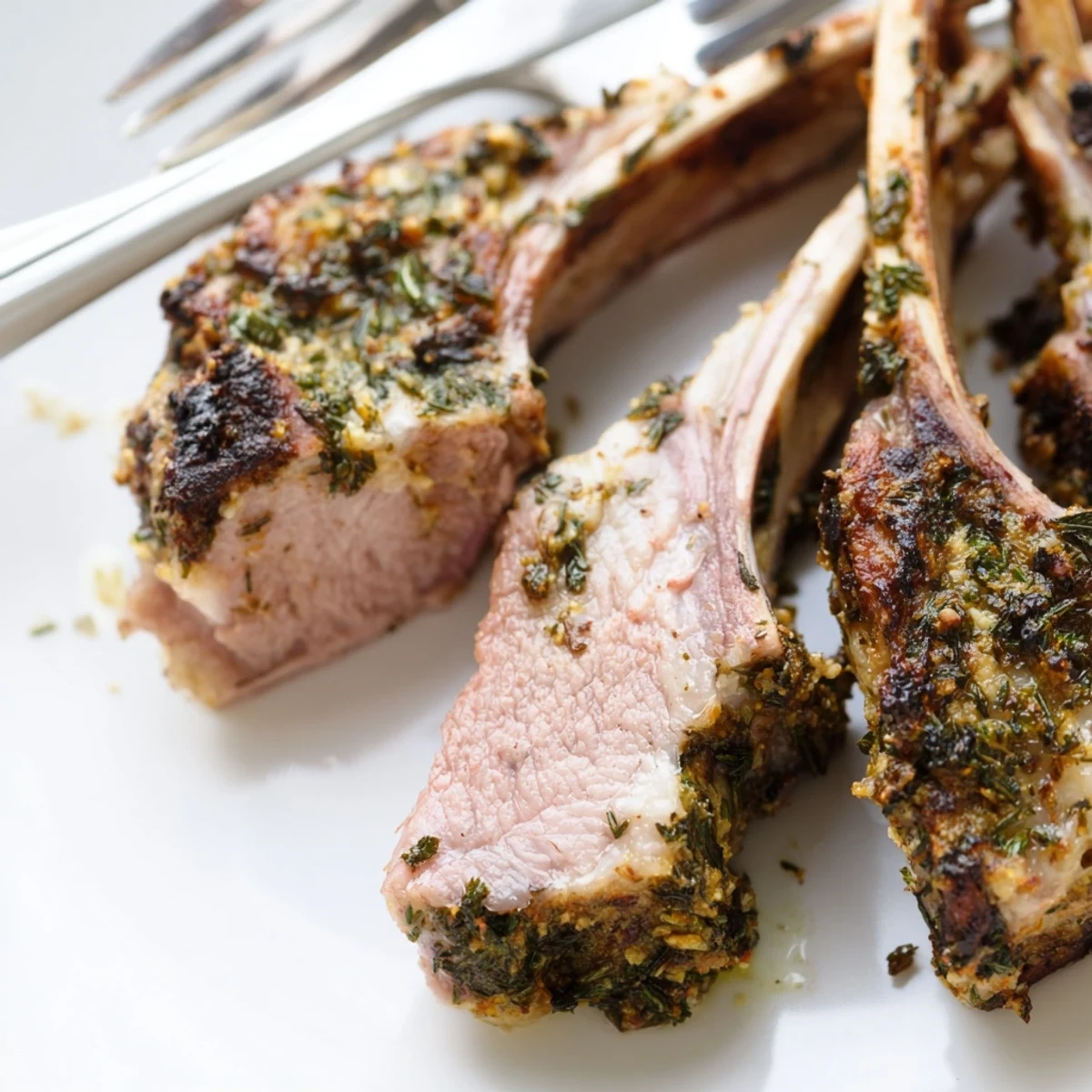
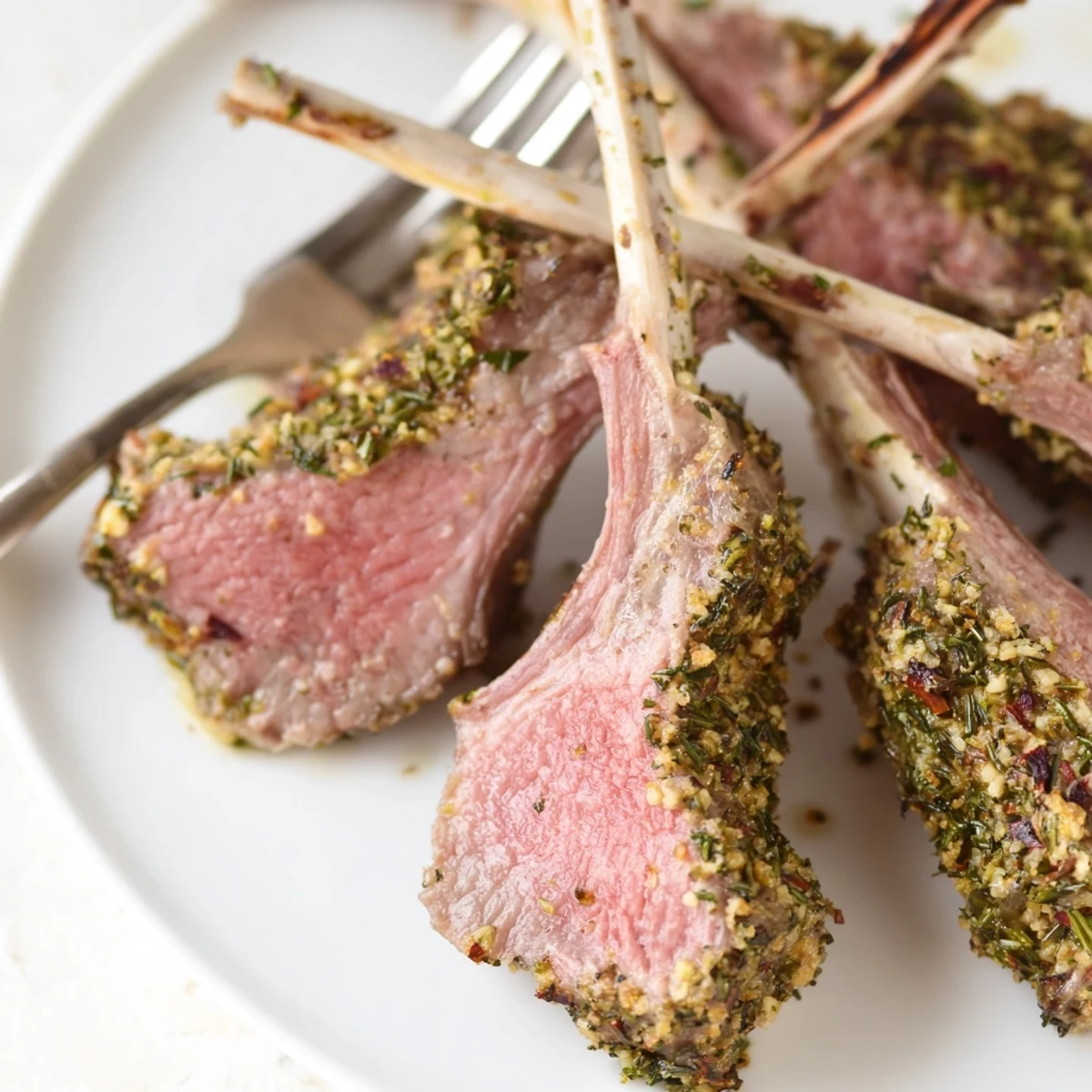
Pin This dish features a tender rack of lamb, seasoned and seared to lock in juices. It is then coated in a fragrant mustard-herb crust made from rosemary, parsley, thyme, garlic, and lemon zest. Roasting it in the oven results in a golden, flavorful crust with a juicy, medium-rare interior. Resting before slicing allows flavors to develop fully. Perfect served with lemon wedges and fresh herbs.
The preparation uses simple techniques like searing and roasting, highlighting fresh herbs and Dijon mustard to elevate the natural lamb flavors. Ideal for a refined main course that combines elegance with straightforward cooking.
There's something about the sizzle of a seared lamb rack that stops you mid-conversation. I learned this the hard way one spring evening when I was trying to impress someone who actually knew food, and instead of panicking, I leaned into what I knew: good lamb deserves simple, bold flavors. The mustard-herb crust came together almost by accident that night, but it's been my go-to ever since.
My neighbor smelled the rosemary and garlic roasting one evening and actually came over to see what I was making. She stayed for dinner, and watching her face when she tasted that first bite—that's when I knew this recipe had staying power. Now it's what I make when I want to show someone I care about cooking for them.
Ingredients
- Rack of lamb (about 8 ribs, 1.5–2 lbs): Look for a rack with good marbling and fat coverage; the fat cap is what gives you that beautiful caramelization when seared.
- Salt and freshly ground black pepper: Don't skip grinding your own pepper right before cooking—the aroma makes such a difference.
- Dijon mustard (2 tablespoons): This isn't just a binder; it adds a subtle tang that cuts through the richness of the lamb without overpowering the herbs.
- Olive oil (2 tablespoons): Use a good quality oil here since you'll taste it in the crust—cheap oil turns bitter when it roasts.
- Garlic (2 cloves, minced): Fresh garlic only; dried loses its punch and can turn acrid in the oven heat.
- Fresh rosemary (2 tablespoons, finely chopped): The woodsy backbone of this crust; I learned to chop it fine so every bite gets herb flavor, not woody bits.
- Fresh parsley (2 tablespoons, finely chopped): This brightens everything up and keeps the crust from tasting too heavy.
- Fresh thyme (1 tablespoon, finely chopped): Delicate but essential; it brings an earthiness that makes lamb taste even more like itself.
- Lemon zest (from 1 lemon): This is the secret nobody talks about—it adds freshness and prevents the whole dish from feeling too rich.
- Lemon wedges and additional herbs (for garnish): Serve these on the side so people can adjust brightness to their taste.
Instructions
- Heat your oven and prep the lamb:
- Start at 400°F (200°C) so it's ready when you are. Pat the lamb completely dry with paper towels—this is the step that decides whether you get a golden crust or a steamed exterior. Season generously all over with salt and pepper, getting into every crevice.
- Sear the lamb until golden:
- Heat 1 tablespoon of olive oil in your ovenproof skillet over medium-high heat until it shimmers. Lay the lamb fat-side down first and don't move it for 2–3 minutes; you want that fat to render and brown. Flip and sear the meat side for 1–2 minutes until you see color, then remove it and set aside to cool slightly.
- Make your herb mixture:
- While the lamb rests, combine the mustard, remaining olive oil, minced garlic, rosemary, parsley, thyme, and lemon zest in a small bowl. The mixture should look like a chunky paste with flecks of herb throughout.
- Coat the lamb generously:
- Brush the cooled seared lamb all over with your herb mixture, pressing gently so it adheres to the meat and fat. This is therapeutic in a way—you're literally wrapping it in flavor.
- Roast to perfection:
- Place the skillet right back in the oven and roast for 15–20 minutes. Aim for an internal temperature of 130–135°F (54–57°C) for medium-rare, which is where lamb shines. If you like it more done, add a few extra minutes, but don't go much further or it becomes tough.
- Rest and finish:
- Remove from the oven and tent loosely with foil. This 10-minute rest is non-negotiable—it lets the juices redistribute so every bite stays juicy. Slice into individual chops, garnish with lemon wedges and fresh herbs, and serve immediately while everything is still warm.
 Pin
Pin I once brought this to a dinner party where everyone was expecting something fussy and complicated, and instead they got something that tasted like I'd spent all day in the kitchen when really it took forty-five minutes. That's when it hit me: the best recipes are the ones that look harder than they actually are.
Why This Crust Works
The magic is in the combination of fat, acid, and fresh herbs working together. The mustard provides both tang and an emulsifier so the oil clings to the meat instead of sliding off during roasting. The herbs add complexity without heaviness, and the lemon zest keeps everything tasting bright and alive. I've tried it with dried herbs out of desperation once, and the difference is honestly night and day—fresh herbs are non-negotiable here.
Serving and Pairing
This lamb is elegant enough for a special dinner but simple enough for a regular Wednesday when you want to treat yourself. I usually serve it with roasted vegetables or a creamy potato gratin to soak up the pan juices, but honestly, a simple green salad works beautifully too because it cuts through the richness. A glass of Bordeaux or Pinot Noir beside it is the only other thing you really need to make the moment feel special.
Making It Your Own
Once you master the basic technique, this crust is a playground. I've experimented with different herbs depending on the season and what I have on hand, and it always works as long as you keep the ratio balanced. The structure is what matters: something pungent (mustard), something aromatic (fresh herbs), something bright (lemon), and something rich (oil and lamb fat) all coming together.
- Try adding finely crushed nuts or gluten-free panko over the herb mixture before roasting for a crispier, more textured crust.
- Swap in fresh mint or oregano if rosemary isn't calling to you that day—the principle stays the same.
- Save any pan drippings and spoon them over the carved chops just before serving for extra flavor.
 Pin
Pin This is the kind of recipe that proves you don't need hours in the kitchen to create something that feels like a celebration. Make it once and it becomes a trusted friend you reach for whenever you want to cook something that tastes and feels special.
Recipe Questions & Answers
- → How do I achieve a crispy herb crust on the lamb?
-
Ensure the lamb is seared on all sides before roasting. Brushing with the mustard herb mixture helps the crust adhere and crisp up in the oven. You can also sprinkle gluten-free panko or crushed nuts on top before roasting for extra crunch.
- → What is the ideal internal temperature for medium-rare lamb?
-
Roast the lamb until it reaches an internal temperature of 130–135°F (54–57°C). Use a meat thermometer to check for perfect doneness.
- → Can I prepare the herb crust ahead of time?
-
Yes, the mustard and herb mixture can be mixed a few hours before cooking and refrigerated. Bring it to room temperature before applying to ensure even coating.
- → What sides pair well with this lamb dish?
-
Roasted vegetables, potato gratin, or a simple green salad complement the flavors beautifully. A glass of Bordeaux or Pinot Noir enhances the meal.
- → Is this dish suitable for gluten-free diets?
-
The dish is gluten-free as written. However, double-check the mustard brand for potential gluten content to ensure safety for sensitive individuals.