
 Pin
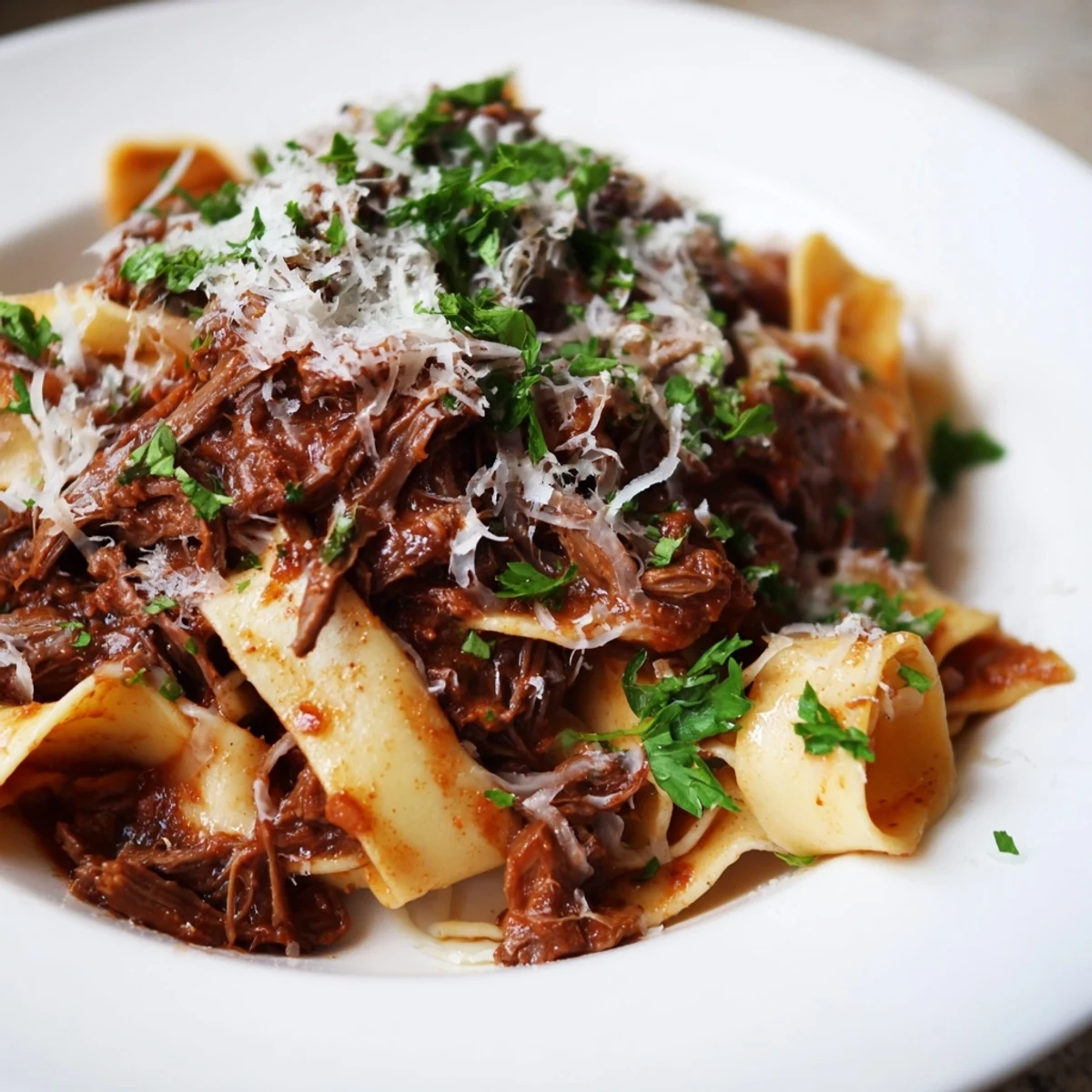
Pin This dish features chunks of beef slowly simmered in a savory tomato and herb sauce until tender and flavorful. The sauce combines carrots, celery, garlic, red wine, and a blend of oregano, thyme, and bay leaves, developing deep, comforting notes throughout the long cooking process. Served atop silky pappardelle pasta and garnished with fresh parsley and Parmesan, it offers a hearty Italian-inspired meal perfect for cozy dinners. The slow cooking method ensures the beef is exceptionally tender and infused with rich flavors. Ideal for family gatherings or weekend meals.
There's something about the smell of beef browning in a hot skillet that makes you forget you have eight hours ahead of you. I discovered this ragu on a grey Sunday afternoon when I wanted something that would taste like I'd been cooking all day, but would actually let me live my life while it simmered. The slow cooker became my secret weapon, transforming chuck roast into something so tender it falls apart at the touch of a fork.
I made this for my partner on the first truly cold evening of autumn, when the kitchen filled with the kind of warmth that comes from hours of slow cooking. We sat at the kitchen counter waiting for the pasta water to boil, talking about nothing important, while the ragu finished its work in the background. That's when I realized this wasn't just a recipe—it was permission to slow down.
Ingredients
- Beef chuck roast (2.5 lbs), cut into large chunks: Chuck has enough fat and connective tissue to become silky and rich after hours in the slow cooker, not dry like leaner cuts would.
- Salt and freshly ground black pepper: Season generously at the start; it's your foundation.
- Olive oil (2 tablespoons): You need just enough to create a proper sear on the beef, which builds the flavor base.
- Yellow onion (1 large), finely chopped: The sweetness mellows after slow cooking, becoming almost caramelized without the effort.
- Carrots (2) and celery stalks (2), diced: These create the soffritto—the aromatic base that Italian cooking is built on.
- Garlic (4 cloves), minced: Add it after the soffritto softens, so it doesn't burn and turn bitter.
- Dry red wine (1/2 cup): The alcohol cooks off, leaving behind depth and complexity that water or more broth simply cannot provide.
- Tomato paste (2 tablespoons): Bloom it briefly in the hot pan before adding other liquids to deepen its flavor.
- Crushed tomatoes (28 oz can): Canned is actually better here than fresh; it's picked at peak ripeness and concentrated.
- Beef broth (1 cup): Choose quality broth or make your own; it matters more than people realize.
- Dried oregano (2 teaspoons) and dried thyme (1 teaspoon): Dried herbs are stronger, which is what you want in a long braise.
- Bay leaves (2): Remove them before serving; they've done their job by then.
- Sugar (1 teaspoon): A small amount balances the acidity of the tomatoes without making anything taste sweet.
- Chili flakes (1/4 teaspoon), optional: Add if you want a whisper of heat in the background.
- Pappardelle pasta (1 lb): Those wide, silky ribbons catch the sauce in a way thin pasta never could.
- Fresh parsley (1/4 cup), chopped: Add this at the very end for brightness and color.
- Parmesan cheese, freshly grated: Never use the pre-grated kind; it doesn't melt the same way.
Instructions
- Season the beef and get it ready:
- Pat your beef chunks dry with paper towels before seasoning—this helps them brown properly, not steam. Don't be shy with the salt and pepper; the meat needs to taste good on its own.
- Build your flavor with a perfect sear:
- Heat the oil until it shimmers and almost smokes, then add the beef in batches so you're not crowding the pan. Listen for that sizzle; it means the Maillard reaction is happening, creating those deep, savory notes. Don't move the meat around—let each side sit undisturbed for two to three minutes until you get a proper golden crust.
- Make the soffritto, the Italian way:
- In the same hot skillet, add your chopped onion, carrots, and celery and let them soften together for four to five minutes. This combination of vegetables is the foundation of countless Italian dishes, and you're building something authentic here.
- Finish the vegetables and build aromatics:
- Stir in the minced garlic and cook for just one minute more until fragrant. The goal is garlic that's cooked through but still gentle, not harsh.
- Deglaze and add depth:
- Pour the red wine into the hot pan and use a wooden spoon to scrape up all those browned bits stuck to the bottom—that's pure flavor. Let it simmer for two minutes so some of the alcohol cooks off.
- Combine everything in the slow cooker:
- Transfer the beef and vegetables to your slow cooker, then pour in the wine and all the pan drippings. Add the tomato paste, crushed tomatoes, beef broth, oregano, thyme, bay leaves, sugar, and chili flakes if you're using them. Stir until everything is well combined.
- Let time do the work:
- Cover the slow cooker and set it to low for eight hours. The long, gentle heat will transform the beef into something so tender it falls apart, and the flavors will deepen and marry together. Resist the urge to check on it constantly.
- Finish and adjust:
- When the beef is fork-tender, remove the bay leaves and use two forks to shred the meat right in the pot. Stir it back into the sauce and taste for salt and pepper—you might need more than you think.
- Cook the pasta and bring it together:
- Bring a large pot of salted water to a boil and cook the pappardelle according to package directions. Drain it, reserving a cup of the starchy cooking water, and toss a little ragu sauce through the pasta so it coats every ribbon.
- Serve with generosity:
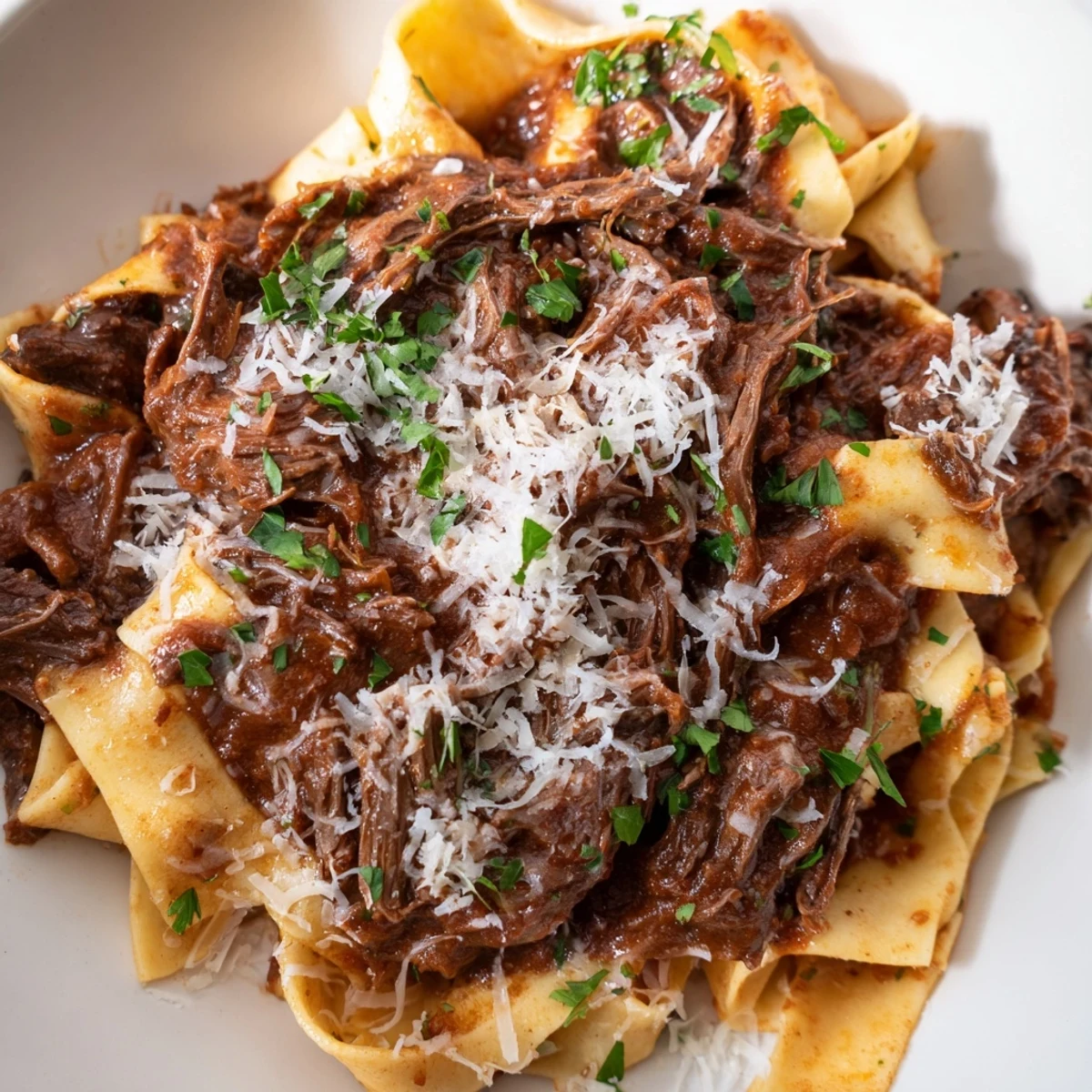
- Pile the pasta onto warm plates and spoon generous amounts of beef ragu on top. Finish with a handful of fresh parsley and a shower of freshly grated Parmesan.
 Pin
Pin One evening, a friend who never compliments food told me this tasted like something her grandmother made in a small village outside Rome. That was worth more to me than any recipe blog five-star review ever could be.
Why Slow Cooking Is Worth Your Time
The slow cooker isn't lazy cooking; it's intelligent cooking. Low heat over eight hours achieves something a high simmer in two hours simply cannot: the connective tissue in the beef breaks down gradually into gelatin, which makes the sauce silky and rich. The long braise also allows flavors to deepen and meld in ways that feel almost magical. You're not standing there stirring; you're letting time and gentle heat do what rushing never could.
The Soffritto Foundation
Soffritto—that combination of diced onion, carrot, and celery—is the base of countless Italian dishes for a reason. When you sauté these vegetables together, their natural sugars caramelize slightly and their flavors deepen. They become almost invisible in the finished ragu, but their absence would be immediately noticeable. This is foundational cooking knowledge worth understanding.
Making It Your Own
This ragu is flexible enough to adapt to what you have on hand or what you prefer. Some people add a splash of whole milk or cream at the end for richness, while others finish with a knob of butter for silkiness. You could use brisket or short ribs instead of chuck if you want to experiment, though the cooking time might shift slightly. The beauty of this recipe is that it's forgiving enough to tolerate your adjustments and strong enough to survive them.
- If you have fresh herbs, use them in small amounts as a garnish, but rely on dried herbs during the long cook.
- Make extra and freeze it in portions for nights when cooking feels impossible.
- Leftover ragu is incredible with polenta, in lasagna, or over creamy mashed potatoes.
 Pin
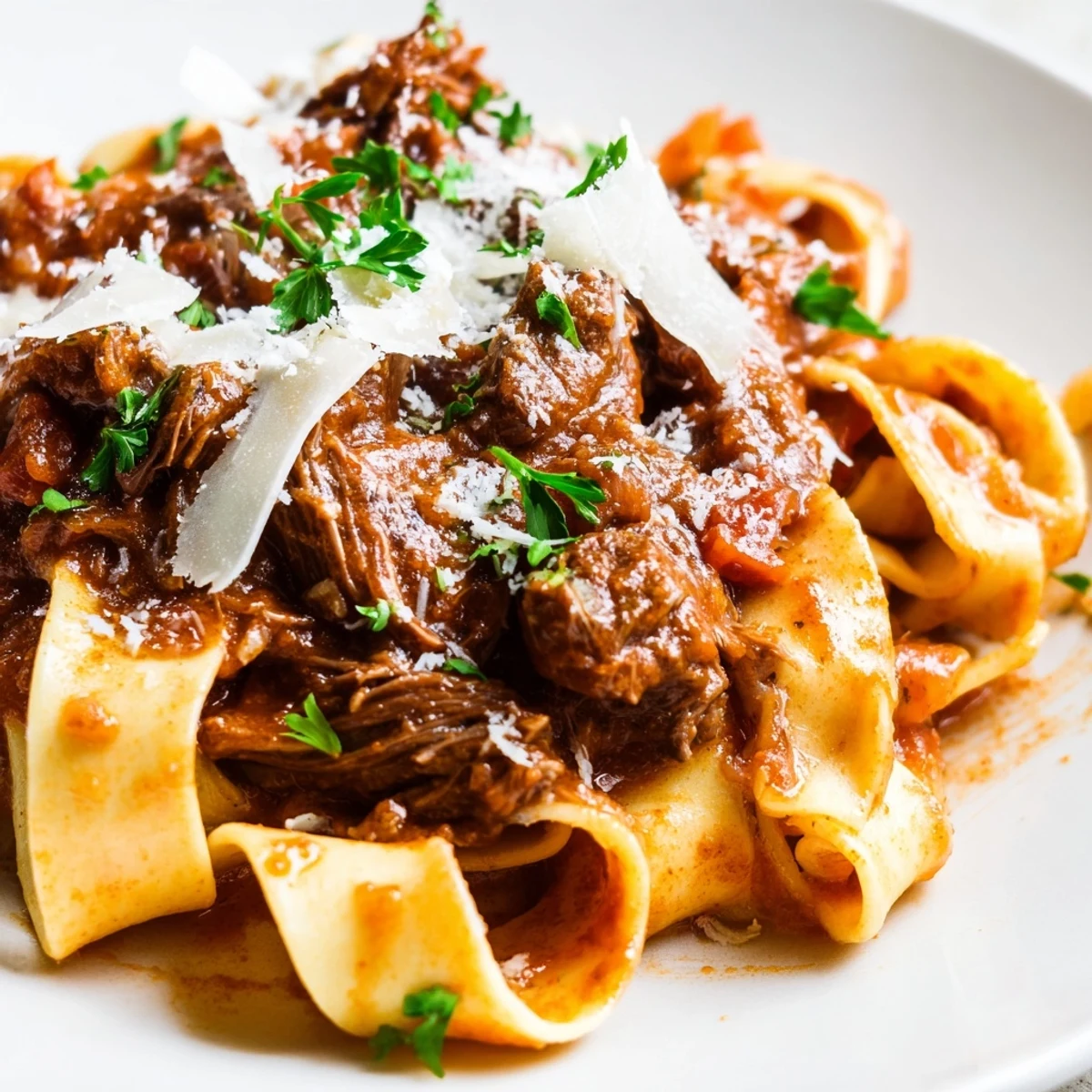
Pin This ragu is the kind of meal that reminds you why cooking matters. Serve it on a night when you want to slow down, and let the people you're feeding taste what happens when you give a dish time and attention.
Recipe Questions & Answers
- → What cut of beef works best for this dish?
-
Beef chuck roast is ideal due to its marbling and texture, which becomes tender during slow cooking. Brisket or short ribs are good alternatives.
- → Can I prepare the sauce ahead of time?
-
Yes, the sauce can be made 1–2 days in advance. Flavors often deepen after resting and reheating.
- → What is the best way to serve with pasta?
-
Cook pappardelle according to package instructions, then toss lightly with the sauce to coat before plating and garnishing.
- → How can I adjust the spice level?
-
Omit or reduce chili flakes for a milder sauce, or add more for a subtle heat boost.
- → Are there suitable pasta substitutes?
-
Whole wheat or gluten-free pasta can be used to accommodate dietary preferences without compromising texture.